From Marina Chatziefraimidou
How social media, political manipulation and digital literacy shape young people’s relationship with the truth — and what Europe can do about it.
We live in an age in which information travels faster than ever, yet that speed is not always matched by accuracy. Forthe generation that grew up with a phone in hand, staying informed increasingly happens inside social media — where the news item sits alongside the advertisement, the meme and the rumour. The question “who controls the truth?” therefore takes on a new and urgent meaning. This article examines how disinformation spreads across the digital environment and how it affects young citizens, focusing on the role of platforms, the manipulation of public opinion,the importance of digital literacy and the European policies designed to counter it. Its aim is to show that a functioningdemocracy depends on young people who are informed, critical and resilient against falsehood.
Beyond the term “fake news”
Although the term “fake news” has come to dominate public debate, many researchers consider it imprecise and evenmisleading. Wardle and Derakhshan (2017) propose instead the concept of “information disorder”, distinguishing three categories: misinformation, where false information is shared without any intent to cause harm; disinformation, where falsehood is deliberately created and spread in order to harm; and malinformation, where genuine information is used to inflict damage. The same study describes three phases of the phenomenon — creation, production and distribution — reminding us that the truth is rarely lost in a single step. This conceptual precision is not merely an academic detail:it shapes how we understand and, ultimately, how we confront the problem.
Social media as the new “gateway” to the news
Young people’s shift towards platforms is now measurable. According to the Reuters Institute’s Digital News Report(2025), roughly 44% of those aged 18–24 name social media as their main source of news, while video-based newsconsumption rose from 52% in 2020 to 65% in 2025. The following year, the same survey (Reuters Institute, 2026)recorded that, for the first time, social media and video networks had on average overtaken both television and news websites as a source of news, with concern about false or misleading information reaching 62% of respondents globally. In Greece, moreover, trust in the news remains among the lowest in Europe (Reuters Institute, 2025). The problem, however, is not only quantitative. Platform algorithms tend to reward content that provokes strong reactions rather than content that is accurate,reinforcing “echo chambers”. As Papantzikou and Vasia (2021) note, platforms now act as gatekeepers of the news, yetthey are not subject to the same national rules as traditional media.
When lies become instruments of power
Disinformation is not always a product of chance; often it is an organised strategy. Research by Bradshaw, Bailey and Howard (2021) of the University of Oxford documented organised manipulation campaigns in more than 70 countries, where governments and political parties deploy “cyber troops” to shape public opinion. According to the same study, “computational propaganda” is used to suppress fundamental rights, discredit political opponents and drown out dissenting voices. Young people, as the most active users of these platforms, frequently find themselves at the centre of such campaigns, particularly during election periods, when misleading videos and targeted advertisements caninfluence their stance before they have even formed a settled opinion.
Digital literacy as a shield
Against this backdrop, the most powerful tool is not censorship but education. Media and information literacy isinternationally recognised as a central pillar of resilience: the handbook by Ireton and Posetti (2018), produced forUNESCO, offers a model curriculum that trains both young people and journalists to verify and critically evaluate content. In the Greek context, initiatives such as KMOP’s European MILES project (KMOP, 2025) familiarise teachers and students with handling disinformation, while pilot news-literacy programmes are gradually being introduced into schools. The goal is not to dictate to young people what to think, but to give them the tools to ask “who is saying this, on what evidence, and why?” before they press the share button.
The European response
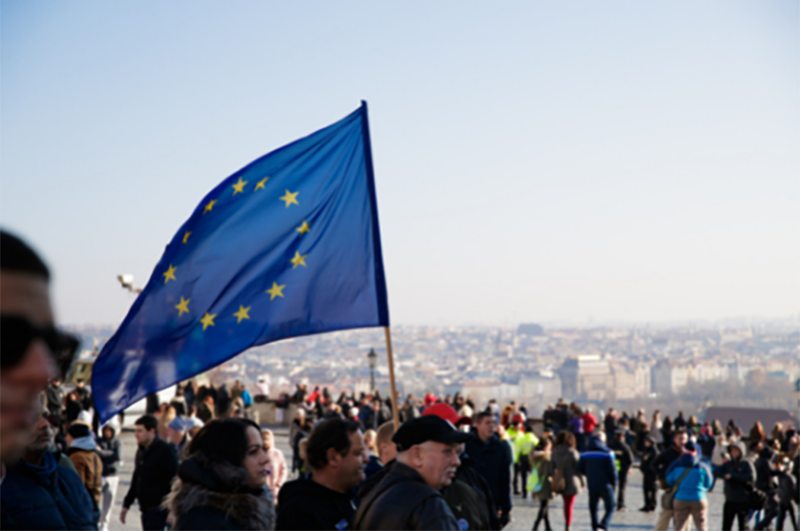
At the institutional level, the European Union has sought to set rules. The Code of Practice on Disinformation, established in 2018 and significantly strengthened in 2022, is a pioneering, self-regulatory framework of commitmentsfor large online platforms (European Commission, 2022). In February 2025, the Code was integrated into the framework of the Digital Services Act, acquiring greater institutional weight (European Commission, 2025). Rules alone, however, are not enough. An evaluation by the European Digital Media Observatory (2025) found thatplatforms’ efforts remain limited, inconsistent and often symbolic — a reminder that institutional will must be accompanied by meaningful implementation and accountability.
Conclusion
The battle for truth in the digital age cannot be won by any single actor. It requires the combined effort of three forces: platforms that take responsibility, institutions that enforce transparency and accountability, and — above all — citizens equipped with critical thinking. For young people the stakes are twofold: they are at once the most exposed todisinformation and the most capable of confronting it, provided they acquire the right tools. The answer to the question “who controls the truth?” cannot be an algorithm or a government; it must be a society of informed people. By investing in digital literacy, we do not merely protect the young — we safeguard democracy itself.
References
Bradshaw, S., Bailey, H. and Howard, P.N. (2021) Industrialized Disinformation: 2020 Global Inventory of OrganizedSocial Media Manipulation. Oxford: Programme on Democracy and Technology, University of Oxford. Available at: https://demtech.oii.ox.ac.uk/wp-content/uploads/sites/12/2021/01/CyberTroop- Report-2020-v.2.pdf
European Commission (2022) The 2022 Code of Practice on Disinformation. Available at: https://digital-strategy.ec.europa.eu/en/policies/code-practice-disinformation
European Commission (2025) The Code of Conduct on Disinformation. Available at: https://digital-strategy.ec.europa.eu/en/library/code-conduct-disinformation
European Digital Media Observatory (2025) Implementing the EU Code of Practice on Disinformation: An Evaluation of VLOPSE Compliance and Effectiveness (January–June 2024). Available at:https://edmo.eu/publications/implementing-the-eu-code-of-practice-on-disinformation-an-evaluation-of-vlopse-compliance-and-effectiveness-jan-jun-2024/
Ireton, C. and Posetti, J. (eds.) (2018) Journalism, ‘Fake News’ and Disinformation: Handbook for Journalism Education and Training. Paris: UNESCO. Available at: https://unesdoc.unesco.org/ark:/48223/pf0000265552
KMOP (2025) False News, Disinformation and Hate Speech in the Digital World. Available at: https://www.kmop.gr/news-psevdeis-eidiseis-parapliroforisi-kai-ritoriki-misous-ston-psifiako-kosmo/
Papantzikou, Z. and Vasia, A. (2021) ‘Παραπληροφόρηση στο διαδίκτυο – Fake news: Διάδοση και Αντιμετώπιση’ [Disinformation online – Fake news: Spread and response], Επιθεώρηση Δικαίου Πληροφορικής [InformationLaw Journal], 2. Available at: https://ejournals.lib.auth.gr/infolawj/article/view/8456
Reuters Institute for the Study of Journalism (2025) Digital News Report 2025. Oxford: Reuters Institute for the Study of Journalism. Available at: https://reutersinstitute.politics.ox.ac.uk/digital-news-report/2025 (Accessed: 6 July 2026).
Reuters Institute for the Study of Journalism (2026) Digital News Report 2026: Overview and Key Findings. Oxford:Reuters Institute for the Study of Journalism. Available at: https://reutersinstitute.politics.ox.ac.uk/digital-news-report/2026/dnr-executive-summary
Wardle, C. and Derakhshan, H. (2017) Information Disorder: Toward an Interdisciplinary Framework for Researchand Policy Making. Strasbourg: Council of Europe. Available at: https://edoc.coe.int/en/media/7495-information-disorder-toward-an-interdisciplinary-framework-for-research-and-policy-making.html