From Anastasia Diamantakou
This article explores the transformation of volunteering in contemporary society, with particular emphasis on Gen Z’s relationship with new, more flexible and experiential forms of social participation. Through examples of initiatives in Greece and abroad, it examines how volunteering is shifting from traditional charity towards organised, thematic and meaningful collective action.
At a time when social awareness is often measured through stories, hashtags and public expressions of support, Gen Z’s relationship with volunteering appears more complex than ever. The new generation is not indifferent. On the contrary, it is growing up in an environment marked by successive social crises, while at the same time being called upon to cope with financial insecurity, academic pressure, precarious employment and constant digital fatigue, which often limit the time and energy available for collective participation.
The question, therefore, is not whether young people care about society, but whether traditional forms of volunteering can still inspire them. Available evidence suggests that the willingness to participate remains strong, but is increasingly shifting towards more flexible, thematic and meaningful forms of action: initiatives with a clear purpose, visible outcomes and genuine social impact.
Volunteering, therefore, can no longer be presented simply as a “good deed”. For Gen Z, it is becoming a way of moving from passive observation to action, from digital awareness to physical presence, and from individual concern to collective intervention.
What Volunteering Looks Like Today: Examples of Actions with Meaningful Social Impact
Volunteering is no longer approached exclusively through the lens of altruism. For many young people, voluntary action represents a space for meaningful social experience, where contribution is linked to personal development, collective engagement and active participation in public life. Through volunteering, young people acquire organisational as well as communication skills. They learn how to collaborate, take responsibility, come into contact with different social realities and understand problems that often remain invisible in everyday life. At the same time, participation in voluntary activities can strengthen self-confidence, empathy and a sense of social usefulness. At a time when individual success is often promoted as the sole objective, volunteering reminds us of the importance of cooperation and shared responsibility. As Wilson (2012) points out, voluntary participation functions as a mechanism of socialisation and empowerment, strengthening both individual skills and citizens’ participation in public life.
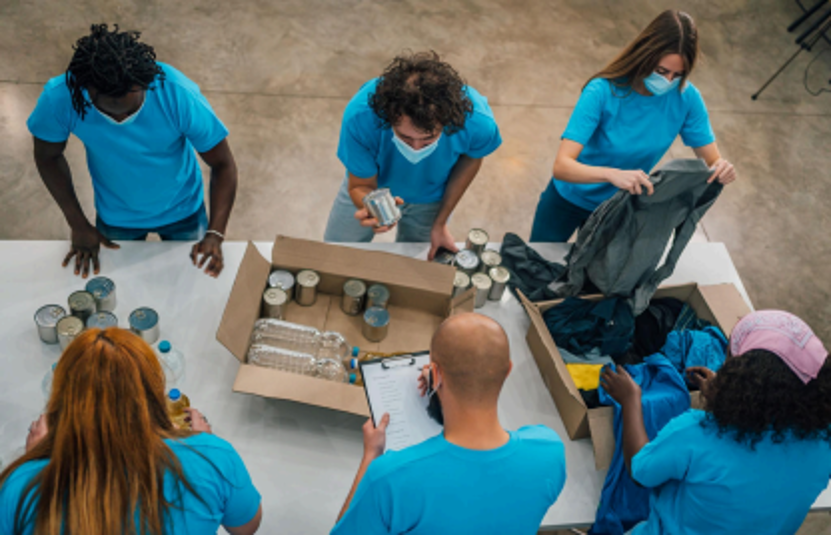
In Greece, the voluntary initiatives that appear to resonate most strongly with young people are those that do not remain at the level of a general appeal to “giving”, but are instead connected to immediate, visible and everyday needs. Food rescue, for example, is not simply an act of charity, but a response to the problems of food waste and food insecurity. The organisation “Boroume” operates precisely in this field, coordinating the redistribution of surplus food to people in need. Similar initiatives, such as collecting fruit and vegetables from open-air markets and distributing them to social grocery stores, demonstrate how a simple voluntary action can produce immediate social impact (Boroume, KYADA, 2023).
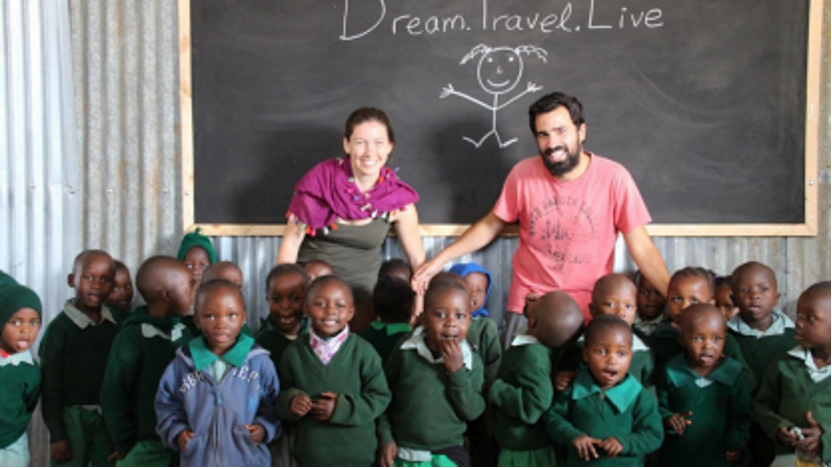
Similarly, Doctors of the World offer opportunities for participation not only in field activities, but also in programme support and the organisation of humanitarian interventions. Within the same broader framework are organisations such as the Hellenic Red Cross, which operates through 82 regional branches and 7,543 active volunteers, carrying out humanitarian, social and support activities throughout the country. In addition, initiatives such as Wheeling2help and the Backpack Brothers operate according to a similar philosophy. They transform travel, adventure and personal involvement into voluntary action through projects aimed at supporting communities, particularly in Africa, through educational activities, social support and local empowerment. The value of such initiatives lies not only in the assistance they provide, but also in the alternative model of participation they offer: less impersonal, more experiential and based on direct interaction with people and their needs.
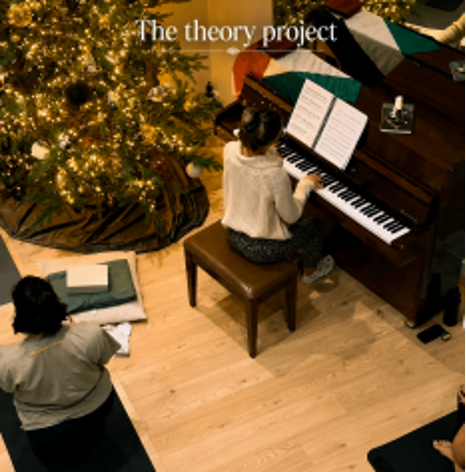
At the same time, smaller, urban forms of solidarity are emerging, demonstrating that volunteering does not always require a large organisation in order to carry social significance. Activities such as the Pilates and Piano events organised by The Theory Project in Neos Kosmos, where exercise and music are combined with fundraising for collective needs — such as supporting the community of the occupied Prosfygika housing complex on Alexandras Avenue or solidarity events for the Palestinian people — reflect a more flexible and contemporary form of volunteering. Here, social participation is not presented as an exceptional or heroic act, but as something that can begin in an ordinary place of everyday interaction: a studio, a music evening, or a small community of people who decide to transform their presence into an act of solidarity.
From Digital Awareness to Social Action: Social Media as a Substitute for Participation
Social media have radically changed the way we talk about social action. Today, a volunteering initiative can become widely known within a few hours, mobilise people, raise resources and bring visibility to issues that might previously have remained on the margins.From this perspective, digital communication has become a valuable tool for contemporary volunteering. It has given a voice to small groups, made information more immediate and enabled social initiatives to move beyond the narrow boundaries of a neighbourhood or a city.
However, this is also where the central contradiction emerges. The same platform that can lead someone towards taking part in an initiative can also create the illusion that they have already participated.A story, a repost or a hashtag can often function as a substitute for actual social presence. Social concern becomes an image, solidarity becomes content and participation is measured in views. What is described in international discussions as performative activism is not simply an “excess” of social media. It reflects the risk that actual action may be replaced by the public display of an intention to act.
This is precisely why volunteering is becoming even more important today. Not because it rejects the digital era, but because it complements it with something that cannot be generated through a screen: physical presence, consistency, personal responsibility and direct contact with real needs.Digital awareness can be the beginning. It cannot, however, be the end of social participation.
Conclusion
It is important, of course, to recognise that volunteering cannot replace the state, nor can it solve deep-rooted social problems on its own. Addressing social inequalities, protecting rights and providing essential social services are primarily responsibilities of public institutions. Nevertheless, volunteering can play a complementary role by strengthening social cohesion and cultivating a culture of participation and solidarity.
Volunteering in 2026 is not identical to the forms it took in previous decades. It has become more flexible, more thematic and often more immediate, responding to the needs of a rapidly changing society and of a generation seeking forms of participation with meaningful content. Despite these changes, its core remains the same: taking responsibility towards other people and towards the community.
In a social environment where individualism, fatigue and disengagement weaken collective bonds, volunteering reminds us that social cohesion cannot be taken for granted. It is built through action, relationships of trust and sustained presence. Volunteering cannot replace institutions, nor can it address profound social problems on its own. It can, however, cultivate the culture of participation that every democratic society needs in order to remain vibrant.
Bibliography
European Commission. (2024). Flash Eurobarometer: Youth and democracy. Publications Office of the European Union.
Athens University of Economics and Business. (2025). The Profile of the Volunteer in Greece. Athens: AUEB.
Putnam, R. D. (2000). Bowling Alone: The Collapse and Revival of American Community. Simon & Schuster.
Bodossaki Foundation. (2024). Action Plan for Civil Society in Greece. Athens: Bodossaki Foundation.
United Nations Volunteers. (2024). State of the World’s Volunteerism Report 2024. United Nations Volunteers.
Wilson, J. (2012). “Volunteerism Research: A Review Essay.” Nonprofit and Voluntary Sector Quarterly, 41(2), 176–212.