

This article explores the conditions under which higher education institutions are called to operate, the alignment between academic studies and labor market needs, as well as the new tools developed to support students and reduce the inequalities that hinder their access to education.
By Maria-Evangelia Arevythi
In an era of successive economic crises, high inflation, and rapid social and technological changes, one of the issues consistently at the forefront of both political debate and business initiatives is education. The key question is whether current educational models are evolving alongside the new generation of students or remain trapped in outdated structures that fail to meet young people’s needs.
At a supranational level, education is being challenged to prove that it is not merely a “formal pathway” to obtaining a degree, but a springboard toward professional integration and sustainable participation in the labor market—with skills that translate into real employability and career advancement opportunities.
From the lecture hall to the job market: the skills mismatch
Employers are looking for a combination of technical competence, digital skills, critical thinking, and problem-solving abilities, while academic programs often remain focused on theoretical instruction and memorization, lacking sufficient mechanisms for timely adaptation.
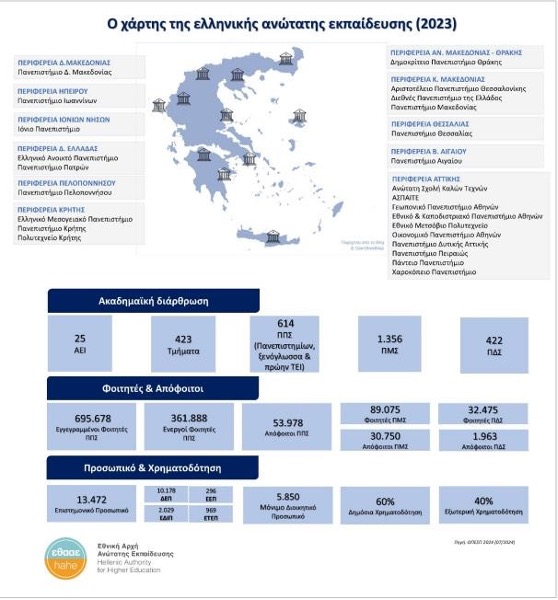
A direct consequence of the mismatch between academic studies and labor market demands is reflected in indicators that continue to highlight a gap between Greece and other European countries. In 2024, the employment rate of “recent graduates” (aged 20–34, not in education or training) in Greece stood at 73.2%, significantly lower than the EU average of 82.3% (Eurostat, 2025).
These data suggest that this is a long-standing structural issue within Greek society. Although it is often addressed through general approaches such as “making universities more practical,” more targeted and systematic solutions are considered necessary.
According to findings from a study conducted by the American-Hellenic Chamber of Commerce in November 2024, there is a significant lack of knowledge among employees in the fields of innovation, development, and new technologies (American–Hellenic Chamber of Commerce, 2024).
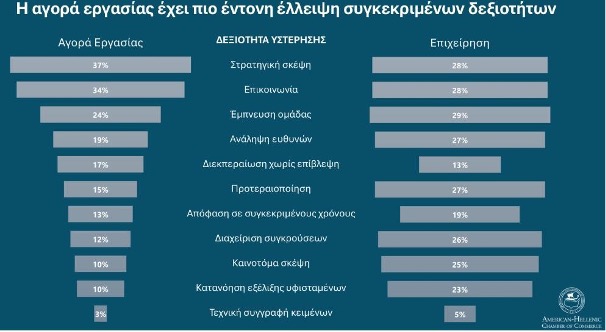
When the labor market demands critical analysis, the ability to solve complex problems, and evidence-based decision-making, the answer is not simply more “labs,” but teaching methods that require the active application of knowledge (e.g., simulations, applied case studies, group projects with evaluation of arguments and data).
At the same time, the development of strong feedback mechanisms—such as graduate tracking systems, systematic mapping of skills by sector, and curriculum adjustments based on evidence—along with updating the database of the National Organization for the Certification of Qualifications and Vocational Guidance (EOPPEP) to include all professional qualifications, as well as the corresponding ESCO registry of the European Union, will help young people integrate more quickly and smoothly into their field of employment (European Commission, 2025).

Inequalities in higher education take multiple forms. They are socioeconomic (housing costs, transportation, the need to work alongside studies), geographical (unequal opportunities between urban centers and peripheral regions, uneven access to infrastructure and networks), digital (access to equipment, internet connectivity, and digital skills that determine participation in distance learning), as well as institutional (differences in resources and infrastructure between institutions, unequal access to research, innovation, and student support).
Within this context, distance education can play a dual role. On the one hand, it reduces certain barriers (mobility constraints, geographical limitations, and offers flexibility for working students). On the other hand, if not accompanied by supportive policies, it may deepen the digital divide, turning access to technology into a “precondition for participation” rather than a neutral tool. The European Commission itself recognizes that digital education must be high-quality, accessible, and inclusive, precisely because unequal access to digital tools and skills creates new forms of exclusion (European Commission, 2025).
Artificial intelligence may be the most transformative tool for universities today. International literature and practice recognize AI as a cutting-edge tool for higher education, contributing to more efficient and effective implementation not only of academic functions but also of the overall administrative operations of institutions.
In particular, some institutions have already moved forward with the design of specialized degree programs in artificial intelligence and have integrated relevant courses into existing curricula across various fields (e.g., business administration, law, humanities). Their goal is to equip students with the ability to understand and solve problems in AI-driven environments, manage applications (e.g., in Human Resources, Marketing, Finance), enhance their creativity, and recognize the ethical risks associated with its use.
A key prerequisite for all of the above, however, is the commitment of institutional leadership to the use of artificial intelligence, along with the development of a corresponding culture among staff and the necessary training.
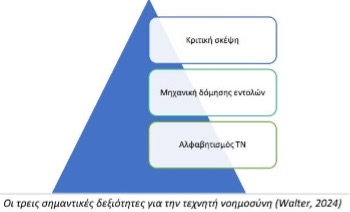
At the same time, artificial intelligence opens up a new dimension of inequality: inequalities in assessment and academic integrity. It is no coincidence that in international discussions on higher education in the age of AI—such as during Digital Learning Week in Paris, as well as in specialized consultations on higher education—the question “what is worth assessing in the age of AI” was explicitly raised. Emphasis was placed on cultivating skills such as creativity, critical thinking, and ethical judgment, rather than simply producing text.
If assessment is not redesigned, a structural injustice emerges: students with greater resources (technological tools, guidance, access to more advanced systems) gain an advantage, while those with fewer digital or social resources risk being disproportionately disadvantaged.
Between competitiveness and inclusion: private universities and student expulsions
One of the most pressing issues currently is the promotion of legislation for the establishment of private higher education institutions, as well as policies concerning student expulsions. Private institutions of higher education appear to enjoy greater independence and autonomy compared to public universities, although they are subject to certain external controls by public authorities (e.g., evaluation of academic standards, sustainability criteria, quality assurance, etc.).
However, this issue should not be viewed as a neutral “technical regulation,” but rather as an attempt to reshape how opportunities are distributed. Strengthening a private education sector—typically associated with tuition fees and different funding models—tends to create conditions for differentiation among students based on financial resources, networks, and their ability to cover the cost of studies and living expenses.
At the same time, student expulsions—especially when applied through uniform rules—may disproportionately affect those studying under conditions of limited time and resources (such as working students or individuals with family or caregiving responsibilities), thereby widening existing inequalities throughout the educational journey.
From this perspective, the core of the debate is not only about the “efficiency” or “acceleration” of studies, but about maintaining public higher education as a universal guarantee of equal opportunities—an idea historically linked to the country’s constitutional commitment to higher education as a public good (Article 16 of the Constitution).
Public universities, therefore, must remain competitive in the face of new challenges without losing their social role, and must strategically adapt: offering modern student support services, meaningful academic assistance for those at risk of dropping out, flexibility for working students, strong internationalization without social exclusion, and investment in digital infrastructure and AI as tools for quality (not privilege).
Conclusion
Can universities ultimately respond to the needs of the new generation in a labor market that is more fluid, more globalized, and more demanding than ever? The answer cannot be given in simplistic terms.
The labor market requires skills that continuously evolve and must be constantly validated; digital and lifelong learning demand appropriate infrastructure and modern methods; artificial intelligence enhances the educational process but also transforms the very logic of assessment.
However, if these changes are not designed with equality in mind, existing gaps risk widening—between institutions with unequal resources, between students with different starting points, between those who can afford the financial and time demands and those who are silently excluded.
The real challenge, therefore, is not whether universities are “modernizing,” but whether they are transforming in a way that genuinely empowers the new generation.
References
- American–Hellenic Chamber of Commerce (2024) Survey on Employers’ Skills Needs
- European Commission (2025) Digital Education Action Plan 2021–2027
- European Commission (2025) European Skills, Competences, Qualifications and Occupations (ESCO): Overview / Skills & competences
- Eurostat (2025) Employment rates of recent graduates – Statistics Explained (data extracted July 2025)
- OECD (2024) Education at a Glance
- UNESCO (2025) What’s worth measuring? The future of assessment in the AI era
- Hellenic Authority for Higher Education (2024) Annual Report on the Quality of Higher Education 2023, Athens
- Pagkartanis, A. (2025) “Universities: Changes in student assessment following the widespread use of AI in assignments,” Newmoney, December 28












1 Comment
Heidi4538
https://shorturl.fm/kfT8x