

From Anastasia Diamantakou
Social reality is not reflected only in numbers and institutional texts; it is inscribed, in the harshest way, on people’s bodies and lives. Gender-based violence and femicide are not isolated incidents, but fragments of a normality that is reproduced and nurtured within social structures and relationships. Despite the important legislative steps that have been taken in Greece in recent years, reality shows that violence against women remains an acute and persistent social phenomenon that requires coordinated efforts in order to be overturned.
GENDER-BASED VIOLENCE
Gender-based violence, according to Directive (EU) 2024/1385 (European Union, 2024), is violence directed against a person because of their gender, or violence that disproportionately affects persons of a particular gender. It is a complex and multidimensional form of violence, encompassing a wide range of behaviours and practices. It may take the form of domestic, physical, sexual, psychological, or economic violence.
It is worth clarifying that the victims of gender-based violence include all recipients of violence due to their gender identity — a definition that is not limited to biological sex, but also includes all gendered subjectivities, masculinities and femininities, of social gender that do not fall within the male–female binary.
DOMESTIC VIOLENCE:
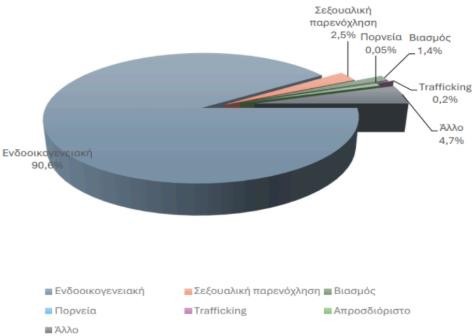
Domestic violence is one of the most frequent, yet also one of the least visible, manifestations of gender-based violence, precisely because it takes place within the home or intimate-partner environment — a space that, in principle, should be founded on safety, trust, and protection. It is a timeless and cross-cultural phenomenon, with deep social, historical, and patriarchal roots, which is not limited to isolated incidents of physical abuse but includes a broader web of control, power, and oppression.
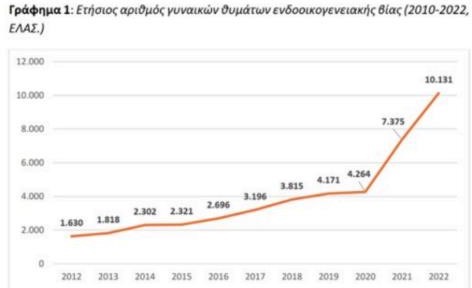
Domestic abuse is the leading cause of disability and death for European women aged 16 to 44, surpassing even car accidents and cancer, which is indicative of the seriousness of the situation. The rates are alarming, as it is estimated internationally that 27% of women have experienced violence from their partner, while 13% of women have experienced domestic violence (World Health Organization, n.d.).
In domestic violence, there is no single stereotypical “profile” of either the victim or the perpetrator. Instead of generalisations, the scientific approach prioritises the analysis of repeated patterns of risk, control, and dependency. The victim is often in a position of emotional, financial, or social vulnerability, gradually experiencing a weakening of self-esteem, feelings of fear, guilt, or shame, and difficulty disengaging — especially when abuse alternates with periods of remorse, reconciliation, and temporary calm.
The perpetrator, correspondingly, is not defined by one single psychological type, but often presents a need for dominance, possessiveness, jealousy, controlling behaviour, displacement of responsibility, and systematic use of power within the relationship. This forms the so-called cycle of violence (Walker, 1989): tension, violent incident, remorse or “reparation,” and temporary calm, which does not cancel out the violence but, on the contrary, makes it more difficult to recognise and often more deeply rooted.
Legislative interventions addressing domestic violence can be found in many legal systems. However, the case of France is of particular interest, as it places emphasis not only on punishing the perpetrator but also on their immediate removal from the shared living space. Specifically, through the ordonnance de protection, French law gives the judge the power to order the removal of the violent partner or spouse from the family home, even during the winter eviction suspension period, recognising that the real protection of the victim primarily requires the removal of the source of the threat, rather than the indirect shifting of the burden onto the victim.
This choice is particularly important because it shifts the focus of state intervention: instead of forcing the victim to flee, seek temporary accommodation, or experience further destabilisation of their life, the perpetrator is removed, so that the physical integrity, psychological safety, and continuity of the daily life of the protected person — and, where children exist, of the children — can be immediately secured. In this way, the French approach highlights a more substantive and victim-centred model for addressing domestic violence.
In the Greek legal order, the main legislative instrument is Law No. 3500/2006, which includes the most serious and severe forms of violence, without providing for psychological and economic violence. In marriage and cohabitation, the boundaries between the rights and obligations of spouses or partners appeared unclear. For this reason, the concept of marital rape was non-existent until a few years ago, since a woman’s sexual satisfaction of her husband was considered both a moral and legal duty of the wife under the “contract” of marriage.
In Greece, marital rape became a criminal offence under Law No. 3500/2006, overturning the view that entering into and maintaining close interpersonal relationships automatically implies consent to every future sexual encounter. However, what constitutes consent is not defined in Greek Criminal Law — a gap that must be regulated in order to avoid crimes such as the Mazan case in France.
This case, involving victim Gisèle Pelicot, highlighted in the most shocking way the issue of consent at the core of sexual crimes: her husband systematically drugged her for years and invited other men to rape her while she was unconscious, with many of the defendants attempting to claim that they believed it was a “consensual game” between the couple.
This case triggered intense public and legal debate in France, precisely because the French law in force at the time did not explicitly include consent in the definition of rape, but focused on elements such as violence, threat, coercion, or surprise. For the Greek legal order, the discussion is no longer centred on the complete absence of consent from the law, since Article 336 of the Penal Code has already moved towards a consent-based model, but rather on the need for a more substantive clarification of its content.
The case aptly demonstrated that consent must be prior, free, specific, informed, and revocable, and that it cannot be inferred from silence or from a person’s inability to react. This very direction also sheds light, for Greece, on the need for a clearer and more protective understanding of sexual autonomy.
The above forms of violence, although they constitute criminal offences, are not reported, confirming their characterisation by the Council of Europe as a “shadow pandemic” (Council of Europe, n.d.). Regarding the response to the problem, in 2024 the Panic Button was launched on a pilot basis through a mobile application. It is a digital service aimed at combating violence against women. In a discreet and silent way, a woman can alert the authorities from her mobile phone.
It is an initiative of the Greek State in cooperation with the Police and is under the supervision of the Ministry of Social Cohesion and Family (Livos, 2008: 177). It is quite significant, as from March to November 2023, more than 800 women installed the application on their mobile phones and the panic button was activated 143 times. It is now being expanded nationwide, and according to paragraph 3 of Article 1 of Law No. 3500/2006, all adult victims of domestic violence are entitled to register for the Panic Button application and install it on their mobile phones.
It is also worth mentioning that since 15 December 2023, the Greek version of the Bright Sky application has been available on Google Play and the Apple Store. The application focuses specifically on victims of domestic violence and abuse against women, providing the necessary information on how a woman can deal with it, but above all, how she can recognise in time that she is a victim of psychological and/or physical violence.
ECONOMIC AND PSYCHOLOGICAL VIOLENCE:
Particular importance must be given to the recognition of the less visible forms of gender-based violence, especially psychological and economic violence, which deeply disempower women and often occur within the family or intimate-partner relationship.
Psychological violence, precisely because it leaves no visible physical traces, makes both the proof and the legal assessment of psychological pain difficult. Case law tends to recognise it mainly when it is accompanied by identifiable mental disorders, with the result that cases of serious psychological distress that do not reach the level of clinical pathology often remain uncovered.
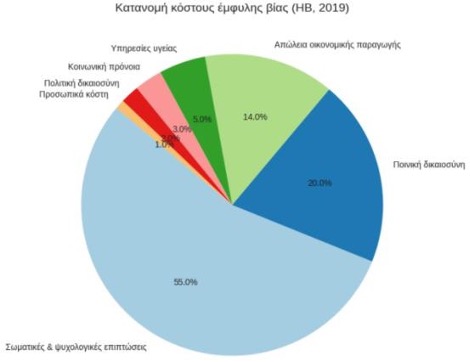
Similarly, economic violence (Adams et al., 2012: 415), although included in the Istanbul Convention and Directive 2024/1385, still lacks a clear legislative definition. It is a form of control manifested through the restriction of access to financial resources, exclusion from work or education, control over money management, or failure to fulfil financial obligations, such as maintenance payments.
Indeed, it does not concern only financially weaker women, but also persons with financial means when they are excluded from decision-making or from control over their own property (Postmus et al., 2016: 695). For this reason, the mere reference to economic violence in the existing regulatory framework is not sufficient. Clear legislative recognition is required, along with a broad definition covering its various manifestations, as well as substantive criminal and institutional treatment, since it is directly linked to dependency, entrapment, and the psychological subjugation of victims in abusive relationships.
SEXUAL VIOLENCE:
Sexual violence constitutes one of the most brutal manifestations of gender-based violence, as it includes any unwanted sexual behaviour imposed without consent and in violation of a person’s sexual freedom. It is not limited only to rape or attempted rape, but extends to a broader range of non-consensual acts of a sexual nature, from forced physical contact to acts that violate the dignity and autonomy of the victim.
The data are revealing: both at national and European level, women and girls continue to be the main victims, confirming that sexual violence is not an isolated deviation but a structured social phenomenon with a clear gendered dimension.
Particularly worrying is the transformation of sexual violence in the digital environment, especially through the non-consensual dissemination of personal or sexual material. Although the Greek legal order has rightly criminalised this behaviour under Article 346 of the Penal Code, the term “revenge pornography” is inappropriate and misleading (European Parliament, 2023).
It is problematic, on the one hand, because it does not always correspond to the actual motive of the perpetrator, which is not necessarily revenge, and, on the other hand, because the term “pornography” refers to material produced with the purpose of dissemination or profit — something fundamentally different from the reality of victims.
For this reason, the adoption of the term “non-consensual sharing of intimate or manipulated material,” as reflected in Directive 2024/1385, appears more accurate and more protective. Terminology is not neutral: it determines the way in which the legal order understands, names, and ultimately addresses the harm suffered by victims.
FEMICIDE:
Femicide is an issue that dominates public discourse, mainly through media coverage. It is not a meaningless term; rather, it brings back to the forefront a crucial question: How safe is the position of women, ultimately, within the family, in relationships, in the workplace, and in society itself?
For this reason, the discussion around femicide does not concern only the criminal assessment of certain extreme incidents, but the very way in which a society understands equality, freedom, and the limits of institutional protection against gender-based violence (Maropoulou, 2020: 1).
The term femicide, which was developed within radical feminist criminology, already has half a century of history in sociological and legal theory. Etymologically, it comes from the English word femicide — a combination of the words female and homicide — and was systematically used by feminist sociologist Diana Russell, who as early as 1976 (Russell, 1977: 3) highlighted the need to specifically name the killing of women precisely because they are women, because they violated socially imposed rules and behaviours assigned to their gender: because they were considered unloving mothers, unfaithful wives, disobedient daughters, or sex workers who dared to say no.
In contemporary international and European literature, the term broadly describes the murder of a woman or girl because of gender and is recognised as the most extreme form of gender-based violence. Since the 1990s, international organisations such as the United Nations and the World Health Organization have officially recognised the term in international texts.
According to the Vienna Declaration, femicide is defined as the “killing of women, young girls, female foetuses and infants for reasons related to their gender, whether committed within the family or any other interpersonal relationship, or by anyone in society, or whether committed or tolerated by the State or its agents” (United Nations Office on Drugs and Crime, 2012).
Thus, the UN classifies femicide as a hate crime, and states are called upon to establish a legal framework that responds to issues of prevention, protection, and criminal repression. Naturally, each legal order focuses on different manifestations of the phenomenon, depending on the particular social and cultural experiences of each country. Thus, in Latin and Central America, which constitute the birthplace of the concept of femicide, the term has a broader meaning than the one adopted by European states.
Another argument supported within the legal community by advocates of establishing femicide as a sui generis offence — a distinct crime in the Penal Code — concerns the differences it presents compared to ordinary homicide. In ordinary homicide, the objective elements of the crime are founded on the violation of the legally protected good of life, which is protected universally and without exception as a fundamental condition of human existence.
The criminal wrongfulness therefore focuses on the deprivation of another human being’s life, regardless of the victim’s particular characteristics. In femicide, however, while the good of life remains primarily affected, an additional dimension of protection simultaneously emerges: the right of a woman to live free from gender-based discrimination, stereotypes, and violence that stems precisely from her gender.
In this sense, femicide is not exhausted in the mere killing of a person, but reflects the extreme violation of two interlinked legally protected goods: on the one hand, life itself, and on the other, the equal enjoyment of life without gendered devaluation, domination, or exclusion. This is why its legal and criminological recognition seeks to make visible the fact that certain homicides of women are not gender-neutral, but are inscribed within a framework of structured inequality and gender-based violence.
Very often, mechanisms and practices of concealment of the phenomenon’s true identity operate by representing it as a “bad moment.” We verbally reframe this crime as a “crime of jealousy” or a “crime of erotic passion,” and place it within the private sphere, resulting in the obscuring of its systemic, political, and social causes.
At the same time, the characteristics of the femicide perpetrator are pathologised, as he is described as a “human-shaped monster,” a beast in human form, as someone a priori insane, acting out of his “animal instincts.” He is thus retranslated into a form of social otherness, with the aim of placing him in the category of persons with diminished understanding and, therefore, diminished criminal responsibility (Maropoulou, 2020).
The issue of diminished criminal responsibility, and especially of acting under intense emotional disturbance, is particularly thorny. Intense emotional disturbance is a circumstance that ensures more lenient criminal treatment of the perpetrator because it is accepted that the act was committed in a state of psychological overexcitement caused by a sudden and intense surge of passion that excludes rational thought (Walklate, 2007: 97). But how can we speak of a sudden condition in the crime of femicide when the crime is the tragic outcome of long-term demeaning, abusive, and oppressive behaviour?
Another reason supporting the proposal for such institutional recognition can be explained through an analogy. Let us go back to the not-so-distant year 2019, when doctors in hospitals were confronted with the symptoms of a then unprecedented disease that they did not know. Let us consider how we would have collectively dealt with the health crisis and coordinated all appropriate bodies if the disease had been called “Disease X” and not COVID-19.
The disease of our time, as the WHO aptly described it, is femicide. Unfortunately, in our country, the lack of recognition of the term does not allow us to address it, since there is not even a national body for recording incidents of femicide. Consequently, the relevant public debate often draws data from non-state initiatives which, although they highlight the phenomenon, lack the status of an official institutional statistical source.
Data from the GGDSP show a dramatic increase in femicides in 2021 — 23 women — compared with previous years. This number is clearly higher, and the real scale may in fact be much greater, if we consider that only the tip of the iceberg of a phenomenon with a very high dark figure and a serious deficit of visibility is recorded. In any case, it must be recalled that this is a crime with deep social and historical roots, which for many decades escaped attention and was not recorded as a gender-based crime in official statistical measurements.
Law is not a neutral instrument for regulating social conflicts. Law is a fundamental tool for consolidating, entrenching, and reproducing gender inequalities and patriarchal structures, because beyond regulating social relations, it is also a key means of shaping social perceptions.
The issue cannot be addressed solely through a criminal-law-centred approach. On the contrary, substantive protection requires a coherent and multi-level legislative intervention that extends across several branches of law, such as family law, inheritance law, and correctional legislation.
CONCLUSION:
In conclusion, addressing gender-based violence and femicide cannot be limited to fragmented criminal interventions or legislative additions of a symbolic nature. What is required is a coherent and multi-level institutional strategy, extending from prevention and early detection to substantive protection, judicial response, and the real restoration of victims.
Femicide, as the most extreme manifestation of gender-based violence, makes it clear that the problem is not only criminal, but deeply social, cultural, and institutional. For this reason, the prerequisite for any meaningful change is the recognition of the gendered dimension of violence, the strengthening of protection mechanisms, the training of competent authorities, and the formation of a stable culture of zero tolerance towards every form of gendered devaluation, control, and abuse.
BIBLIOGRAPHY:
Maropoulou, M. (2020) ‘Femicide: Limits and terms of acceptance of a new legal term’.
Russell, D.E.H. (1977) ‘Report on the International Tribunal on Crimes against Women’, Frontiers: A Journal of Women Studies, 2(1), pp. 1–6.
Corradi, C., Marcuello-Servós, C., Boira, S. and Weil, S. (2016) ‘Theories of femicide and their significance for social research’, Current Sociology, 64(7), pp. 975–995.
United Nations General Assembly (2014) Resolution A/RES/68/191. New York:
United Nations.
United Nations General Assembly (2016) Resolution A/RES/70/176. New York:
United Nations.
United Nations Office on Drugs and Crime (2012) Symposium on Femicide: A Global Issue that Demands Action!.
Tsouni, A. (2020) ‘Observatory on femicides: Criticality, data analysis and proposals’, in Petraki, G. (ed.) Femicides: Findings, Questions and Question Marks. pp. 42–54.
Ta Nea (2023) ‘Women in the firing line: What new data show about femicides in our country’, Ta Nea, 25 November.
Maropoulou, M. (2020) ‘Femicide: Limits and terms of acceptance of a new legal term’.
Walklate, S. (2007) Imagining the Victim of Crime. Maidenhead: Open University Press.
Council of the European Union (n.d.) Working Party on the 2030 Agenda for Sustainable Development.
European Union (2024) Directive (EU) 2024/1385 of the European Parliament and of the Council on combating violence against women and domestic violence. Brussels: European Union.
World Health Organization (n.d.) Proportion of ever-partnered women and girls aged 15–49 years subjected to physical and/or sexual violence by a current or former intimate partner in their lifetime (%).
Walker, L. (1989) The Battered Woman. Woman and Society. Athens: Ellinika Grammata.
Council of Europe (n.d.) Violence against women and girls before, during and after COVID-19: the shadow pandemic that must be addressed.
Livos, N. (2008) ‘Thoughts on the criminal treatment of domestic violence’, in Milioni, F. (ed.) Domestic Violence: Perspectives after Law No. 3500/2006. Proceedings of a training seminar, 28/06/2007. Athens: Sakkoulas, p. 177.
Adams, A.E., Sullivan, C.M., Bybee, D. and Greeson, M.R. (2012) ‘Understanding economic abuse in the lives of survivors’, Journal of Interpersonal Violence, 27, pp. 411–430.
Postmus, J.L., Plummer, S.-B. and Stylianou, A.M. (2016) ‘Measuring economic abuse in the lives of survivors: Revising the Scale of Economic Abuse’, Violence Against Women, 22, pp. 692–703.
European Union Agency for Fundamental Rights (2024) One in three women in the EU has experienced violence.












3 Comments
Anne4495
https://shorturl.fm/VA3rm
Adelyn3845
https://shorturl.fm/AfBm4
Luke1259
https://shorturl.fm/tUBqL